

Emotional investing — making portfolio decisions out of fear rather than a long-term plan — is one of the biggest drivers of poor investment returns. History shows that investors who panic sell during downturns typically miss the recoveries that follow, while those who stay invested and stick to a long-term strategy are rewarded over time.
How Stress and Crisis News Affect Investors
In any crisis, “playing it safe” to avoid losing money can feel like the only rational move. But over the past 60 years, we’ve seen the same pattern repeat: crisis hits, markets fall, and then markets recover.
The Dow Jones Industrial Average rose from 679 points in 1959 to over 36,000 in January 2022. Regardless of the type of crisis, history shows that long-term investors who stayed the course and didn’t lose sight of their financial goals have been rewarded.
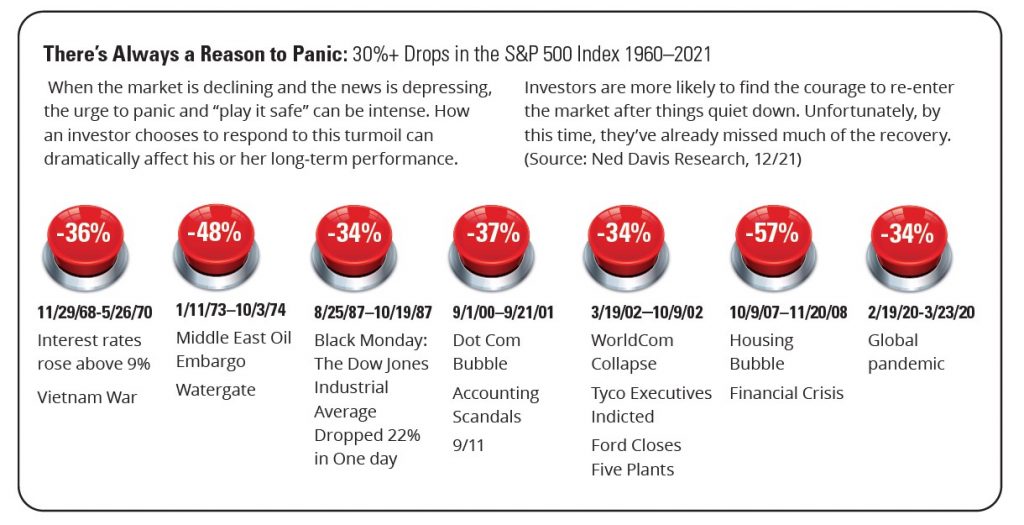
Since 1960, markets have fallen more than 30% seven times. There has always been a reason to panic — and markets have recovered every time.
Why Market Volatility Fuels Anxious Decisions
Crisis News Drives Anxiety
When crises hit, news ratings surge. In the early days of the COVID-19 pandemic, from March 16–20, 2020, Fox News saw its ratings climb 89% over the same period the year before, while CNN was up 193% and MSNBC climbed 56%.
More news consumption also means more searching — for market updates, for economic news, for reassurance. All of that searching can make investors more anxious about the economy, not less.
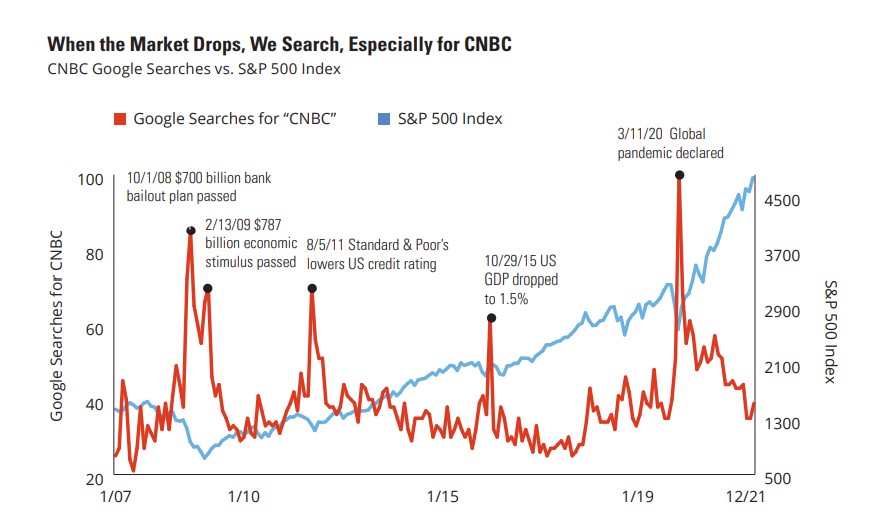
When we’re anxious, we’re more likely to focus on negative information. Given a choice between an optimistic outlook and a bleak one, an anxious investor naturally gravitates toward the threatening headline. This is a core piece of investor behavior, and it can lead to short-term decisions that undermine long-term retirement planning.
The Risk of “Playing It Safe”
Crises give investors real reasons to worry, and many respond by trying to make their portfolios “safer.”
By the end of 2021, cash investments in the U.S. totaled $17.2 trillion. Cash feels secure because it protects principal — but that safety often comes at a cost. Loss hurts roughly twice as much as an equivalent gain feels good, which is why sharp market drops create intense pressure to move into cash.
Moving to safer assets may calm nerves in the moment, but it often harms long-term returns. Investors who exit during downturns frequently miss the recoveries that follow — trading long-term growth for short-term comfort.
Why Market Timing Rarely Works
Many investors try to time market swings, but research consistently shows this rarely succeeds.
Dalbar’s long-running studies of investor behavior show that average investor returns lag far behind market returns, largely because frequent buying and selling causes underperformance. Anxious investors also tend to overestimate the risks of owning stocks and underestimate the risks of avoiding them.
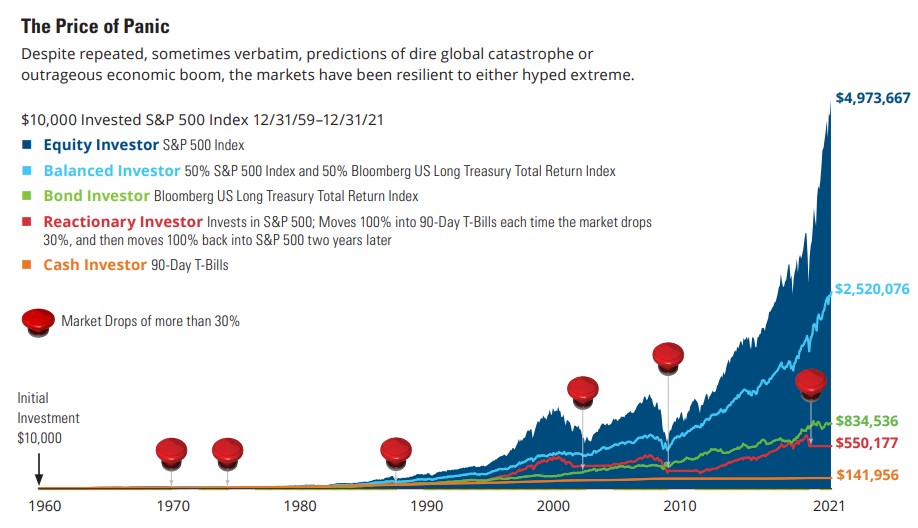
The gap is dramatic. A reactionary investor who moved to cash every time the market dropped 30%, then re-entered two years later, ended up with roughly a third of what a fully invested equity investor earned over the same period. Investors who tried to protect themselves from short-term pain paid for it in long-term growth.
Maintaining Perspective During a Crisis
Managing investments during extreme market volatility can feel overwhelming, and no one has to do it alone.
In March 2020, markets swung wildly, with some days seeing drops of 6% to 12%. On one day, the Dow fell by 2,000 points; just days later, it surged by the same amount. Hearing “worst day ever” followed almost immediately by “best day ever” left many investors shaken — and it’s exactly the kind of environment where emotional investing takes over.
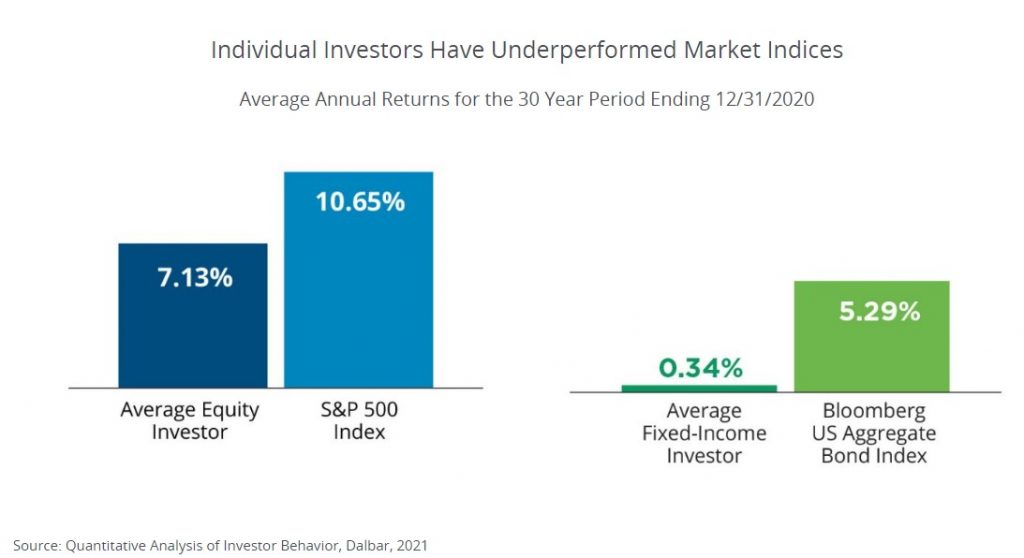
Over the past 30 years, individual investors have trailed both stocks and bonds. The takeaway is clear: investor behavior often matters more than investment performance. That’s exactly why working with a financial professional matters — a trusted advisor helps curb emotional reactions, encourages disciplined investing, and keeps long-term goals in focus, even during periods of extreme uncertainty.
“But It’s Different This Time”
Every crisis feels unlike the ones before it, and in some ways, each one is. With constant news coverage, it’s easy to assume today is bad and tomorrow will be worse.
Yet even amid negative headlines, meaningful innovation continues, often without much attention:
- Researchers have developed new materials, including a plastic reported to be twice as strong as steel under load testing
- Immersive virtual environments have opened new software and technology markets
- Devices now allow patients with paralysis to control digital devices using their thoughts
- Electric, self-driving freight vehicles are improving shipping efficiency and safety
The U.S. has faced 26 bear markets since 1929 — and has recovered from all 26. As Warren Buffett has put it, “It’s never paid to bet against America.”
Three Things to Remember About Investing During Market Volatility
- Crises repeat, and so do recoveries. Every market drop in the past 60 years has been followed by a recovery.
- Behavior matters more than timing. Investors who try to time the market historically underperform those who stay invested.
- A financial professional can help. An advisor provides perspective, encourages discipline, and helps you resist emotional decisions during downturns.
Next Steps
Talk with your financial professional to gain perspective and guidance in times of crisis. If you’re a Florida investor without a trusted advisor, consider finding one who understands both your long-term goals and the local factors — from Florida’s tax environment to regional retirement planning needs — that shape your financial plan.
For more insights on retirement and investment planning, see:
Frequently Asked Questions
What is emotional investing, and why is it risky?
Emotional investing means making decisions based on fear or greed rather than a long-term plan. During market volatility, this often leads investors to sell prematurely or avoid opportunities, reducing their potential long-term gains.
How does financial news affect investor behavior?
Financial news can trigger anxiety and stress, drawing attention toward negative market events. This often results in reactionary decisions like panic selling, which can harm long-term investment returns. Staying informed — without becoming overwhelmed — is key.
How can I avoid panic selling during a market downturn?
Maintain a diversified portfolio, set clear long-term financial goals, and consult a financial advisor before making changes. Understanding historical market patterns can also help reduce emotional decision-making in the moment.
What role do financial advisors play during a crisis?
Advisors provide perspective, help maintain discipline, and guide investors through volatile markets. They reduce emotional reactions and help ensure long-term investment goals stay on track, even during downturns.
Why is it important to stay invested during market volatility?
Markets have historically recovered from every downturn. Staying invested ensures you participate in those recoveries, while moving entirely to cash may protect principal short-term but often sacrifices long-term growth.
Talk to a Financial Professional Before You React
The next crisis will come with its own headlines, its own version of “this time is different,” and its own temptation to panic. History suggests the response that works is the same one that’s always worked: stay disciplined, stay invested, and lean on a financial professional who can help you separate the news cycle from your long-term investment strategy.
Sources: Ratings Skyrocket for Cable News Amid Wall-To-Wall Coronavirus Coverage, Newsweek, 3/23/20; Fear, Finance, and The High Anxiety Client, MIT AgeLab, 2016; Board of Governors of the Federal Reserve System (US), 2021; What Is Loss Aversion?, Psychology Today, 3/8/18; Quantitative Analysis of Investor Behavior, Dalbar, 2021; MIT scientists create a super plastic that’s 2 times stronger than steel, Fast Company, 2/7/22; 2022 will be the biggest year for the metaverse so far, CNBC, 1/1/22; Synchron kicks off clinical trial on device that helps patients with paralysis communicate, mobihealthnews, 1/29/21; Einride launches autonomous pods and electric freight operations in US, TechCrunch, 11/3/21; Ned Davis Research, 12/21.
This article is sourced from Hartford Funds Distributors, LLC, Member FINRA.


