

Long-term care insurance (LTCI) is one of the most important — and most confusing — tools for protecting your savings from the cost of extended care. Policies vary widely in structure, and premiums vary just as widely depending on your age, health, and the coverage you select. Here’s what actually drives the cost, what you can expect to pay, and how to compare policies effectively.
What Is Long-Term Care Insurance?
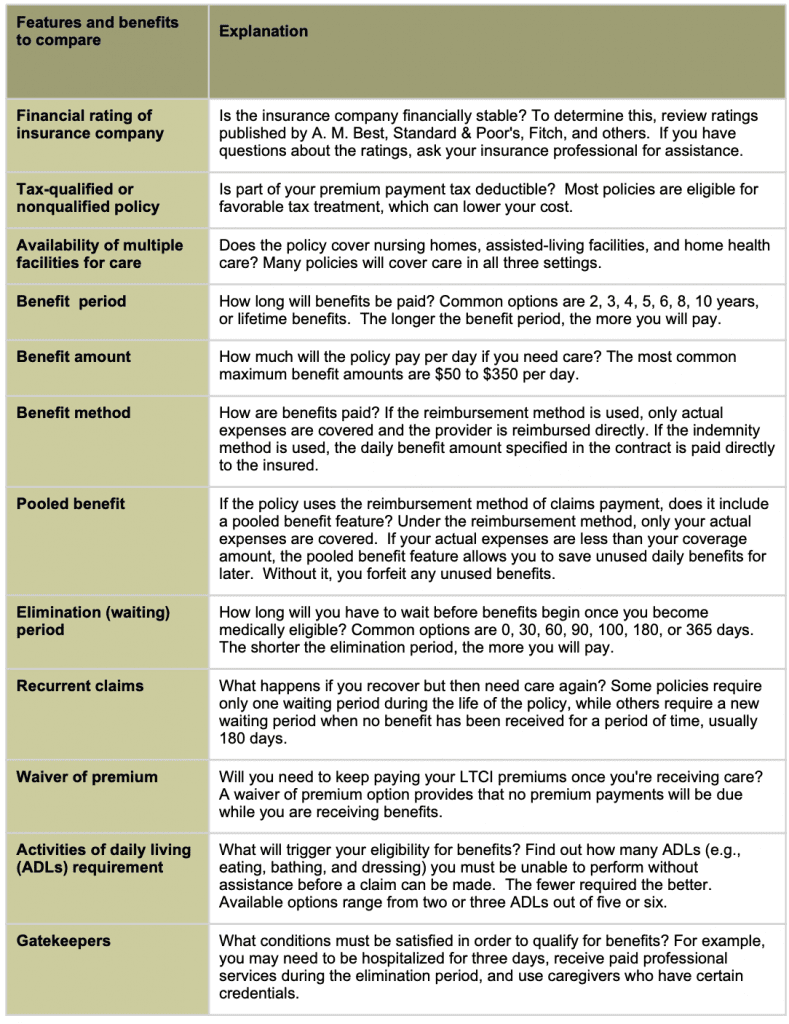
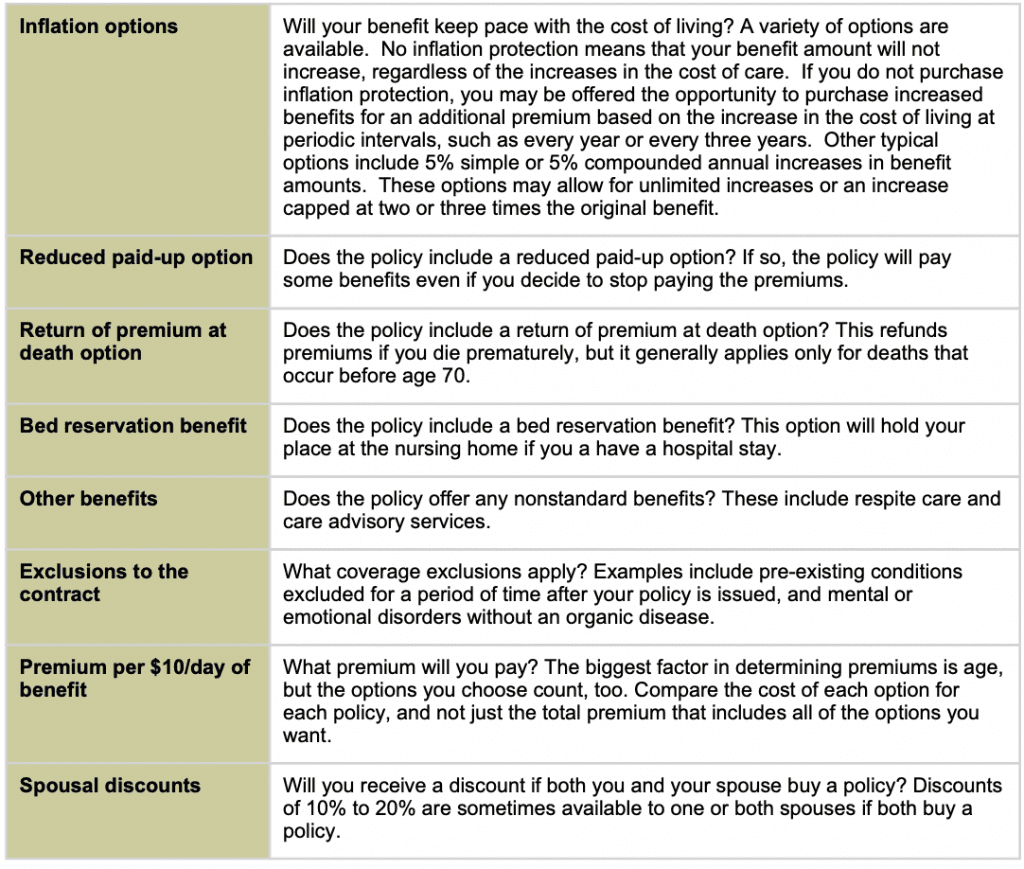
Long-term care insurance helps cover services such as in-home care, assisted living, and nursing home care — costs that Medicare generally does not pay for. It’s designed to protect your savings from the high, ongoing expense of extended care as you age. Policies differ in their coverage amount, benefit duration, and premium structure, which is exactly why comparing them apples-to-apples matters.
Print this list of features and benefits, and refer to it as you compare LTCI policies. To find the right policy for you, make sure you’re comparing similar policies that combine the benefits and features you actually want.
Factors That Affect the Cost of Long-Term Care Insurance
Several factors influence long-term care insurance premiums:
- Age. The younger you are when you buy a policy, the lower your premium. Buying later in life typically costs significantly more.
- Health. Insurers review your medical history during underwriting. Chronic conditions can increase premiums or affect eligibility altogether.
- Gender. Women statistically use long-term care services longer than men and generally pay higher premiums for the same coverage — often 30–60% more.
- Coverage amount. Higher daily or monthly benefit amounts lead to higher premiums.
- Policy duration. Longer benefit periods cost more than shorter ones.
- Elimination period. This is the waiting period before benefits begin. Shorter elimination periods mean higher premiums.
- Inflation protection. Adding an inflation protection rider increases premiums but helps preserve your policy’s purchasing power as care costs rise over time.
Average Cost of Long-Term Care Insurance in 2026
According to the American Association for Long-Term Care Insurance (AALTCI), which publishes annual industry benchmarks, premiums for a policy with a $165,000 initial benefit pool and 3% compound inflation protection break down roughly as follows:
| Age at Purchase | Single Male | Single Female | Couple (combined) |
|---|---|---|---|
| 55 | ~$1,700–$2,200/yr | ~$2,675–$3,750/yr | ~$5,010/yr |
| 60 | ~$1,175–$2,175/yr | ~$1,900–$4,450/yr | ~$2,600–$4,675/yr |
| 65 | ~$2,075–$2,749/yr | ~$3,600–$4,599/yr | ~$7,030/yr |
A few things worth keeping in mind:
- These figures assume inflation protection is included — a policy without it will cost noticeably less but loses purchasing power over time.
- Premiums can differ by thousands of dollars between insurers for essentially identical coverage, which is why comparison shopping matters as much as choosing the right benefit structure.
- Your actual premium depends on your specific age, health, gender, and the features you select — these are benchmarks, not quotes.
Tips to Lower Your Long-Term Care Insurance Premium
A few strategies can help manage the cost:
- Buy earlier to lock in lower rates before age-related increases apply.
- Choose a longer elimination period if you can comfortably self-fund the initial waiting period.
- Select a shorter benefit period if it still meets your anticipated needs.
- Compare multiple insurance providers — pricing for comparable coverage can vary by more than 50% between carriers.
Long-Term Care Insurance Costs for Florida Residents
Long-term care costs themselves vary by location, and Florida’s mix of higher-cost coastal metros and more affordable inland areas means the care costs you’re insuring against can differ meaningfully depending on where in the state you plan to age in place. For Southwest Florida residents weighing LTCI as part of a broader retirement plan, comparing local nursing home and assisted living costs against a policy’s daily benefit amount is a useful gut-check before selecting coverage.
Frequently Asked Questions
How much does long-term care insurance cost per month?
In 2026, monthly premiums generally range from roughly $80 to $530, depending on age, gender, health, and coverage amount. Couples and policies with inflation protection typically fall toward the higher end of that range.
Does long-term care insurance cost more for women than men?
Yes. Women typically pay 30–60% more than men for identical coverage, since they statistically require long-term care for longer periods on average.
What is the best age to buy long-term care insurance?
Buying earlier — often in your 50s — generally locks in a lower premium, since cost increases with age and health changes can affect eligibility later in life.
Does long-term care insurance coverage include inflation protection?
Not by default. Inflation protection is typically an optional rider that increases your premium but helps your benefit amount keep pace with rising care costs over time.
How much can I save by comparing long-term care insurance providers?
Premiums for comparable coverage can vary significantly between insurers — in some cases by 50% or more — so getting quotes from multiple carriers is one of the most effective ways to lower your cost.
Long-term care insurance provides financial protection and peace of mind, but premiums vary widely based on your age, health, gender, and the features you choose. Starting early and comparing policies carefully can help you find coverage that fits your needs without straining your budget. A fee-only fiduciary advisor can help you weigh LTCI against other long-term care funding strategies as part of your overall financial plan.


