


Whole Life Insurance: A Complete Guide to How It Works
Whole life insurance is a type of permanent life insurance designed to remain in force for your entire life, as long as premiums are paid on time. This guide explains the whole life insurance meaning, how it works, its benefits, costs, and important risks to understand before purchasing a policy.
For individuals and families in Fort Myers and across Southwest Florida, whole life insurance is a common option among those seeking lifelong coverage with predictable premiums.
What Is Whole Life Insurance?
Whole life insurance is a permanent life insurance policy that stays active for the policyholder’s entire lifetime, provided premiums remain current. In exchange for fixed premiums, the insurance company guarantees payment of a set death benefit when the policyholder dies.
Unlike term life insurance, which covers a specific period, a whole life insurance policy does not expire as long as it remains in good standing.
How Whole Life Insurance Works
Understanding how whole life insurance works starts with two core components: fixed premiums and a guaranteed death benefit.
- Fixed premiums: The premium amount stays the same for the life of the policy, making costs predictable over time.
- Guaranteed death benefit: The insurance company promises to pay a set benefit to beneficiaries upon the policyholder’s death.
- Cash value growth: A portion of each premium contributes to the policy’s cash value, which grows over time.
Any guarantees associated with a whole life insurance policy are based on the claims-paying ability of the issuing insurance company.
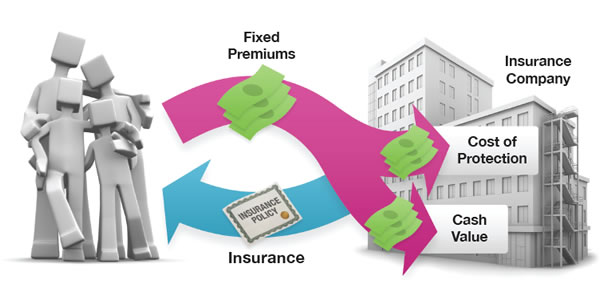
Whole Life Insurance Cash Value
One of the defining features of whole life insurance is its cash value component — essentially a cash reserve that builds within the policy over time.
- Cash value grows at a modest, steady rate of return.
- Growth within the policy is tax deferred.
- Cash value accumulates as long as the policy remains active.
This cash value is a key reason whole life insurance is often viewed differently from term policies, since it functions as both protection and a growing asset within the policy.
Whole Life Insurance Loans
Most whole life insurance policies allow policyholders to borrow against a portion of their accumulated cash value.
Key points about whole life insurance loans:
- Interest paid on policy loans is credited back into the policy’s cash value.
- Loans taken from a policy are generally free of current income taxes, provided certain conditions are met — such as the policy not lapsing or maturing.
- Loans reduce both the policy’s cash value and death benefit.
- Taking a loan increases the possibility that the policy may lapse.
- If the policy lapses, matures, or is surrendered, the outstanding loan balance is treated as a distribution and becomes taxable.
Accessing cash value through borrowing — or through partial surrenders — can reduce the policy’s overall value and benefit. It may also increase the risk of the policy lapsing and could result in a tax liability if the policy terminates before the insured’s death.
Whole Life Insurance Death Benefit
When the policyholder passes away, their named beneficiaries receive the death benefit from the whole life insurance policy. Depending on how the policy is structured, this benefit may or may not be taxable.
Because the death benefit is guaranteed as long as the policy remains in force, whole life insurance is often chosen for its predictability compared to other types of coverage.

Benefits of Whole Life Insurance
The core whole life insurance benefits include:
- Lifelong coverage that does not expire, as long as premiums are paid
- Predictable, fixed premium payments
- A guaranteed death benefit for beneficiaries
- Tax-deferred cash value growth
- The ability to borrow against accumulated cash value
Whole Life Insurance Costs
Several factors affect the cost and availability of a whole life insurance policy, including:
- Age
- Health
- The type and amount of insurance purchased
In addition to premiums, whole life insurance policies carry expenses, including mortality charges and other fees. If a policy is surrendered prematurely, the policyholder may also face surrender charges and potential income tax implications.
Before implementing a strategy involving whole life insurance, it’s important to determine whether you are insurable.
Whole Life Insurance Risks to Understand
While whole life insurance offers guarantees and predictability, there are risks and limitations to be aware of:
- Any guarantees depend on the issuing insurance company’s ability to continue making claim payments.
- Accessing cash value through loans or partial surrenders can reduce both cash value and the death benefit.
- Loans increase the possibility that the policy may lapse.
- If the policy lapses, matures, or is surrendered with an outstanding loan, the balance is considered a taxable distribution.
- Life insurance is not insured by the FDIC (Federal Deposit Insurance Corporation) or any federal government agency, bank, or savings association.
Is Whole Life Insurance Right for You?
Whether whole life insurance is the right choice depends on individual goals, needs, and financial circumstances. Because it combines guaranteed lifelong coverage with a cash value component, it tends to appeal to those seeking predictability and a long-term financial planning tool alongside life insurance protection.
If you’re evaluating whole life insurance in Florida, it’s worth considering how the fixed premium structure, guaranteed death benefit, and cash value growth align with your broader financial goals.
Frequently Asked Questions
What is whole life insurance?
Whole life insurance is a type of permanent life insurance that stays in force for the policyholder’s entire life, as long as premiums are paid, and includes a guaranteed death benefit and cash value component.
How does whole life insurance work?
Whole life insurance works by collecting fixed premiums in exchange for a guaranteed death benefit. A portion of each premium also builds cash value within the policy, which grows on a tax-deferred basis.
What is cash value in a whole life insurance policy?
Cash value is a savings-like reserve that accumulates within a whole life insurance policy over time, growing at a modest rate of return on a tax-deferred basis.
Can I borrow against my whole life insurance policy?
Yes. Most whole life insurance policies allow policyholders to take loans against their accumulated cash value, though loans reduce the cash value and death benefit and increase the risk of the policy lapsing.
Is the death benefit from whole life insurance taxable?
Depending on how the policy is structured, the death benefit paid to beneficiaries may or may not be taxable.
What factors affect the cost of whole life insurance?
The cost of whole life insurance depends on factors such as age, health, and the type and amount of coverage purchased, along with mortality and other policy charges.
What are the risks of whole life insurance?
Risks include potential lapse of the policy due to outstanding loans, tax liability if the policy terminates before death, and the fact that guarantees depend on the financial strength of the issuing insurer.
Is whole life insurance insured by the FDIC?
No. Whole life insurance is not insured by the FDIC or any federal government agency, bank, or savings association.


