

Estate Planning Goals: Strategies and Tools to Consider
A successful estate plan is often shaped by clearly defined estate planning goals. These goals can help guide decisions about how property and assets may be managed, protected, and transferred.
Common estate planning objectives include:
- Minimizing potential taxes
- Avoiding probate where appropriate
- Retaining control over property
- Protecting assets
- Planning for potential incapacity
For individuals and families in Florida, an estate plan may also need to account for applicable state laws and individual circumstances.
Understanding Estate Planning Goals and Objectives
Every estate plan is different, but identifying your priorities can help determine which estate planning strategies and tools may be appropriate.
The main goals of estate planning often focus on protecting assets, maintaining control over property, reducing potential tax burdens, and preparing for the possibility of incapacity.
Once these estate planning goals and objectives are identified, different planning tools may be used to help address them.
Estate Planning Tools and Strategies
A variety of estate planning tools may be used to support different planning goals. Depending on your circumstances, these may include:
- Gifts
- Wills
- Living trusts
- Irrevocable trusts
- Joint ownership arrangements
- Beneficiary designations
Each of these tools may serve a different purpose. Some may help with transferring property, retaining control, protecting assets, supporting estate tax planning, or avoiding probate.
The appropriate estate planning strategies will depend on your individual goals, assets, family circumstances, and applicable laws.
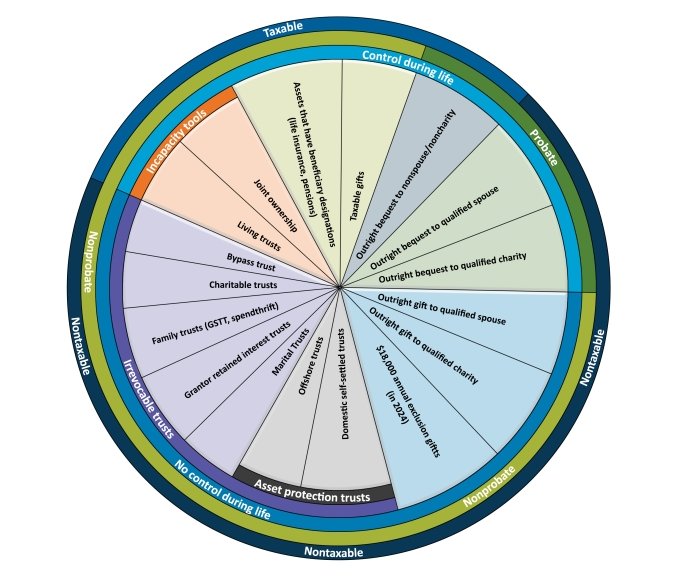
Matching Estate Planning Goals With the Right Tools
Estate planning can involve matching specific goals with the tools designed to help achieve them.
For example, a person concerned about maintaining control over certain property may consider different planning tools than someone whose primary objective is asset protection or avoiding probate.
This approach can make the estate planning process easier to understand by connecting your goals with the available planning strategies.
Why Clearly Defined Estate Planning Goals Matter
Clearly identifying your goals can provide direction when developing an estate plan.
Whether your priorities include minimizing potential taxes, protecting assets, retaining control over property, planning for incapacity, or avoiding probate, understanding your objectives can help you evaluate the available estate planning tools.
For Florida residents, working with qualified professionals who understand applicable estate planning laws can help ensure that planning strategies are appropriate for individual circumstances.
Frequently Asked Questions
What are the main estate planning goals?
Common estate planning goals include minimizing potential taxes, avoiding probate, retaining control over property, protecting assets, and planning for potential incapacity.
What are estate planning tools?
Estate planning tools are legal and financial arrangements that may help accomplish specific planning objectives. Common examples include wills, trusts, gifts, joint ownership arrangements, and beneficiary designations.
How can estate planning help with avoiding probate?
Certain estate planning strategies and tools may help assets pass outside of the probate process. The appropriate approach depends on the type of assets, ownership arrangements, beneficiary designations, and applicable law.
What is estate tax planning?
Estate tax planning involves considering strategies that may help manage potential estate tax consequences as part of a broader estate plan.
Why is planning for incapacity an estate planning goal?
Planning for potential incapacity can help address how certain financial and property-related decisions may be handled if an individual is unable to manage them personally.
The information in this material is for general informational purposes only and is not intended as legal or tax advice. Estate planning laws and tax rules may change and can vary based on individual circumstances. Florida residents and others should consult qualified legal, tax, or financial professionals for guidance regarding their specific situation. The information provided should not be considered a solicitation for the purchase or sale of any security.


