

For millions of employees, the workday doesn’t end when caregiving begins. Many balance caring for a loved one before, after, and even during their jobs — making family caregiver support programs one of the most overlooked levers employers have for building a loyal, committed workforce.
Organizations that offer more empathetic caregiver benefits and policies are consistently viewed more favorably by their employees. The payoff isn’t just goodwill — it’s a stronger, more engaged caregiver workforce.
Caregivers Are a Growing Part of the American Workforce
About 23 million Americans provide ongoing care for an ill or disabled parent, spouse, or child. On top of their home and work responsibilities, these employees spend an average of nine hours per week on caregiving duties.
This isn’t a small or shrinking group — and for employers in states with large retiree populations, including Florida, the number of employees juggling eldercare responsibilities alongside their jobs is likely to keep growing.

Caregiving Affects Careers and Finances
The financial strain of caregiving is significant. Seven in ten caregivers say that taking time off or leaving the workforce to care for a loved one had a significant financial impact on their family.
This financial pressure is a core reason employee caregiver support matters — without it, caregivers are more likely to reduce hours, step back from their careers, or leave the workforce entirely.
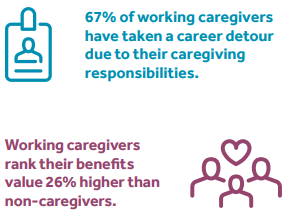
What Caregivers Want From Employers
Caregivers consistently point to a specific set of subsidized support services as most valuable:
- Tax and estate planning, including special needs trusts
- Video-based training and in-person coaching for caring for children with special needs
- Referral services for special education programs
- Back-up care services
- Coaching and wellness support for caregivers
These preferences give employers a clear starting point when deciding where to invest in caregiver benefits.
Building Effective Caregiver Support Programs
Organizations can best support caregivers by establishing inclusive policies and benefits that improve both health and productivity. The following categories of workplace benefits for caregivers have the greatest impact.
Paid Leave
- PTO programs that group time-off reasons into a single category, giving employees flexibility in how they use their time
- Paid family and medical leave for parental bonding or caring for a sick or injured loved one
- Paid sick leave
Flexible Work Arrangements
- Telecommuting options based on an employee’s personal needs, job function, or ability to work remotely
- Flexible scheduling that accommodates caregiving responsibilities, health conditions, or transportation needs
Well-Being Resources
- Employee assistance programs (EAPs) offering mental health and substance abuse counseling
- Wellness initiatives
- Health savings accounts (HSAs) and health reimbursement arrangements (HRAs) to reduce out-of-pocket medical costs
- College savings and student loan reimbursement plans
Inclusive Policies and Communications
- Benefits communications designed to be inclusive of all workers
- Training to help prevent misunderstandings or discrimination
- Ongoing review of Equal Employment Opportunity Commission (EEOC) recommendations to maintain nondiscrimination compliance
Access to Virtual Services
- Telehealth and teledentistry for medical and dental consultations, evaluations, and treatment
- Referral services and online resources covering adult care, child daycare, government financial assistance, support groups, and in-home care
- Health concierge or healthcare advocate services to help resolve healthcare issues during business hours
Why Employer Support for Caregivers Matters
Caregiver support programs aren’t just a benefit line item — they shape whether employees stay, how engaged they are, and how they talk about their employer. Supporting working caregivers through paid leave, flexibility, and inclusive policies helps organizations retain experienced employees who might otherwise be forced to choose between their job and their family.
Frequently Asked Questions
What are caregiver support programs?
Caregiver support programs are employer-provided policies and benefits — such as paid leave, flexible scheduling, and referral services — designed to help employees who care for an ill or disabled family member.
What caregiver benefits do employees value most?
Employees most often value subsidized access to tax and estate planning, special needs coaching, referral services, back-up care, and wellness coaching for caregivers.
How does caregiving affect employees financially?
Seven in ten caregivers report that taking time off or leaving the workforce to provide care had a significant financial impact on their family.
What flexible work options help caregivers most?
Telecommuting and flexible scheduling are among the most effective options, allowing caregivers to adjust their work around caregiving responsibilities, health needs, or transportation constraints.
Why should employers invest in caregiver support programs?
Employees who feel supported by caregiver-friendly policies tend to be more loyal and engaged, which helps employers retain experienced staff and reduce turnover-related costs.
Supporting Caregivers Is a Workforce Strategy
As more employees take on caregiving responsibilities alongside their jobs, caregiver support programs are becoming a core part of workforce planning rather than a nice-to-have. Employers that invest in paid leave, flexibility, and inclusive benefits today are better positioned to retain and support their workforce going forward.
Unless otherwise noted, the source of all information in this report is from the Guardian Workplace Benefits Study 8th Annual (2020). The Guardian Life Insurance Company of America (Guardian), New York, NY. Guardian, its subsidiaries, agents, and employees do not provide tax, legal, or accounting advice. Consult your tax, legal, or accounting professional regarding your individual situation. GUARDIAN® is a registered trademark of The Guardian Life Insurance Company of America.®
© Copyright 2020 The Guardian Life Insurance Company of America


