

Best Medicare Plans in Florida: Compare Advantage, Supplement & Part D Coverage
Choosing Medicare coverage is one of the most consequential financial and healthcare decisions you’ll make in retirement — and Florida’s Medicare market is one of the largest and most competitive in the country. With dozens of Medicare Advantage, Medicare Supplement, and Part D prescription drug plans available across Southwest Florida, the right choice depends on your health needs, budget, preferred doctors, and long-term retirement plans.
At The Art and Science of Successful Planning, we help Florida seniors, retirees, and their families understand their Medicare options in plain language — without pressure toward any single plan or carrier. Every recommendation is based on your specific medical history, projected healthcare needs, and financial goals.
This page is educational in nature. It does not constitute a recommendation of any specific plan, carrier, or coverage level, and it is not a guarantee of eligibility, premiums, or benefits. Speak with a licensed Medicare advisor to review options available in your area.
Understanding Your Medicare Coverage Options
Medicare eligibility generally begins at age 65, though certain individuals under 65 may qualify earlier due to disability or specific medical conditions. Original Medicare Part A (hospital insurance) and Part B (medical insurance) is administered directly by the federal Centers for Medicare & Medicaid Services (CMS) and provides baseline coverage nationwide.
Beyond Original Medicare, most beneficiaries choose to add one of two coverage paths:
You generally cannot have both a Medicare Advantage plan and a Medigap policy at the same time. Understanding the difference is the first step in building the right Medicare strategy.
Each client’s medical history and projected health needs are taken into consideration before any plan type is discussed, since the “best” option varies significantly from person to person.
Part A — Hospital Insurance
Part B — Medical Insurance
Part C — Medicare Advantage
Part D — Prescription Drug Coverage
Medicare Supplement (Medigap) Plans in Florida
Key features of Medigap plans:
Help reduce or eliminate out-of-pocket costs for deductibles, copays, and coinsurance
Standardized nationally by letter: Plans A, B, C, D, F, G, K, L, M, and N (Massachusetts, Minnesota, and Wisconsin use their own standardized formats)
Sold only through private insurance companies, though benefits are standardized by CMS
Do not require referrals — you can see any doctor who accepts Medicare, including specialists
Minimal paperwork, with virtually no claim forms to file
Coverage is portable nationwide, so benefits travel with you if you move
Some plans include foreign travel emergency coverage
Guaranteed renewable as long as premiums are paid, regardless of health changes
New policies include a 30-day “free look” period, allowing a full refund if returned within 30 days
Many plans offer added extras like pharmacy discounts, vision savings, and 24-hour nurse hotlines
Guaranteed Issue Rights: During certain enrollment windows — most notably the six-month period beginning the month you’re both 65 and enrolled in Part B — you generally cannot be denied a Medigap policy or charged more due to pre-existing health conditions.
Outside these windows, medical underwriting may apply in most states.
Medicare Advantage Plans in Florida
What Medicare Advantage plans generally offer:
Access through a defined network of participating hospitals and physicians
Coverage for hospital costs, doctor visits, and other medical services (copays may apply)
Built-in Medicare prescription drug coverage (Part D) in many plans, often at no additional premium
An annual out-of-pocket maximum that limits total healthcare spending
Additional benefits not covered by Original Medicare, such as dental, vision, hearing, or wellness programs
Premiums that are not based on age or health status, with the exception of End-Stage Renal Disease
Enrollment restricted to specific CMS-defined periods (details below)
Medicare Advantage Plan Structures
Medicare HMO Plans
- Single-card convenience with one plan covering medical and often drug benefits
- Plans starting at $0 monthly premium are common in Florida’s competitive market
- Access to a local network of contracted doctors and hospitals
- Many HMO plans require a referral to see a specialist
Medicare PPO Plans
PPO plans offer the same core benefits as HMO plans, plus:
- Freedom to receive care from any provider, in-network or out-of-network
- No referrals required to see specialists
Lower costs when staying within the plan’s network; going outside the network typically costs more
Medicare POS Plans
Point of Service plans function like HMO plans but add flexibility:
- Ability to see out-of-network doctors, typically at a higher copay or coinsurance
- Access to some providers without a referral, depending on the plan
Medicare Special Needs Plans
Special Needs Plans are a type of Medicare Advantage plan designed for beneficiaries in specific circumstances:
- Dual Eligible Special Needs Plans (D-SNPs) — for individuals eligible for both Medicare and Medicaid
- Institutional SNPs — for people living in nursing homes, long-term care, or assisted living facilities
- Chronic Condition SNPs — for individuals managing conditions such as diabetes, chronic heart failure, cardiac arrhythmia, peripheral vascular disease, coronary artery disease, or chronic venous thromboembolic disorder
SNPs combine hospital, medical, and prescription drug coverage into one plan, often with additional care coordination benefits tailored to the qualifying condition.
Private Fee-for-Service Plans
PFFS plans offer flexibility in provider selection while helping manage out-of-pocket costs:
- Freedom to see any doctor or hospital that agrees to accept the plan’s payment terms for that visit
- Coverage for benefits beyond what Original Medicare provides
- Defined limits on out-of-pocket expenses for covered services
Medicare Part D: Prescription Drug Coverage
As a standalone Prescription Drug Plan (PDP), added to Original Medicare and often paired with a Medigap policy
As integrated coverage within a Medicare Advantage plan (Part C)
Each Part D plan maintains its own list of covered medications, known as a formulary, so comparing plans against your specific prescriptions each year is essential — formularies and costs can change annually.
Medicare Enrollment Periods: When You Can Enroll or Make Changes
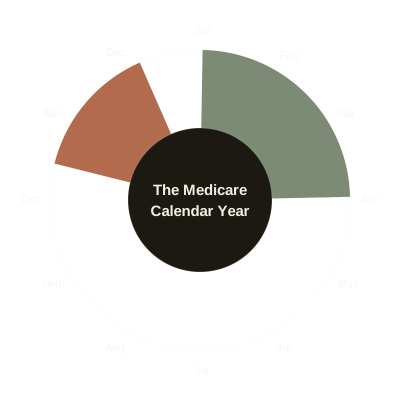
Annual Enrollment Period — Oct 15 to Dec 7
Missing your Initial Enrollment Period without a qualifying Special Enrollment Period can result in permanent late-enrollment penalties for Part B and Part D. Because timing rules are strict and penalty structures can be confusing, many Florida beneficiaries choose to work with a licensed Medicare advisor to confirm which window applies to their situation.
Choosing Between Medicare Advantage and Medicare Supplement
There’s no single “best” answer — the right structure depends on your priorities:
Medicare Advantage
Medicare Advantage tends to appeal to those who want lower monthly premiums, added benefits like dental and vision, and are comfortable with network restrictions.
Medicare Supplement
Medicare Supplement (Medigap) tends to appeal to those who prioritize nationwide provider flexibility, predictable out-of-pocket costs, and minimal network limitations, typically paired with a standalone Part D plan.
Because both paths involve real trade-offs around cost, flexibility, and coverage stability, comparing plans side by side with a licensed advisor — rather than relying on advertising or a single carrier’s presentation — is the most reliable way to make this decision.

Why Work With a Licensed Medicare Advisor in Southwest Florida
Florida has one of the largest Medicare populations in the country, along with a dense, competitive market of Medicare Advantage and Medigap carriers. That density is an advantage for consumers — but it also makes side-by-side comparison more important, not less.
At The Art and Science of Successful Planning, based in Fort Myers, we work with seniors and retirees throughout Southwest Florida to:
- Compare available Medicare Advantage, Medigap, and Part D options for your specific ZIP code
- Review your medical history and current prescriptions against plan formularies and networks
- Explain enrollment deadlines and help you avoid late-enrollment penalties
- Coordinate Medicare planning with your broader retirement and financial plan
- Provide ongoing support during Annual Enrollment Period each year, not just at initial sign-up
We do not represent a single insurance carrier, and we do not guarantee coverage approval, premium amounts, or plan availability. Our role is to help you understand your options clearly so you can make an informed decision.
Frequently Asked Questions
What is the difference between Medicare Advantage and Medicare Supplement?
Medicare Advantage (Part C) is a private-plan alternative to Original Medicare that typically bundles hospital, medical, and drug coverage into one plan with a provider network. Medicare Supplement (Medigap) is separate insurance that works alongside Original Medicare to help cover its out-of-pocket costs, generally offering broader provider flexibility. You cannot have both at the same time.
When can I enroll in a Medicare Advantage plan?
You can typically enroll during your Initial Enrollment Period, the Annual Enrollment Period (October 15–December 7), or the Medicare Advantage Open Enrollment Period (January 1–March 31) if you already have a Medicare Advantage plan and want to switch or return to Original Medicare.
What is a Dual Eligible Special Needs Plan (D-SNP)?
A D-SNP is a type of Medicare Advantage Special Needs Plan designed for individuals who qualify for both Medicare and Medicaid, coordinating benefits across both programs.
Do I need a Medicare Supplement plan if I have Medicare Advantage?
No. Medicare Advantage and Medigap are not designed to be used together. Medigap is intended to supplement Original Medicare, not a Medicare Advantage plan.
What is the best Medicare Supplement plan in Florida?
There is no single “best” Medigap plan for everyone — the right plan depends on your health history, budget, and risk tolerance. Comparing standardized plan letters (such as G or N) with a licensed advisor is the most reliable way to determine what fits your situation.
How do HMO and PPO Medicare Advantage plans differ?
HMO plans generally require you to use a defined network of providers and often need referrals to see specialists. PPO plans allow you to see providers outside the network (typically at a higher cost) and don’t require referrals.
What happens if I miss Medicare's Annual Enrollment Period?
If you miss AEP (October 15–December 7), you may still qualify for the Medicare Advantage Open Enrollment Period (January 1–March 31, limited to one change) or a Special Enrollment Period if you have a qualifying life event. Otherwise, you’ll generally need to wait until the next AEP.
How to choose a Medicare Advantage plan?
Choose a Medicare Advantage plan by comparing provider networks, costs, prescription drug coverage, benefits, and plan ratings. Confirm that your doctors and medications are covered before enrolling.
Speak With a Licensed Medicare Advisor in Fort Myers
Medicare decisions carry long-term financial consequences, and options change every year. Schedule a no-obligation conversation to review the Medicare Advantage, Medicare Supplement, and Part D options available in your area.


