

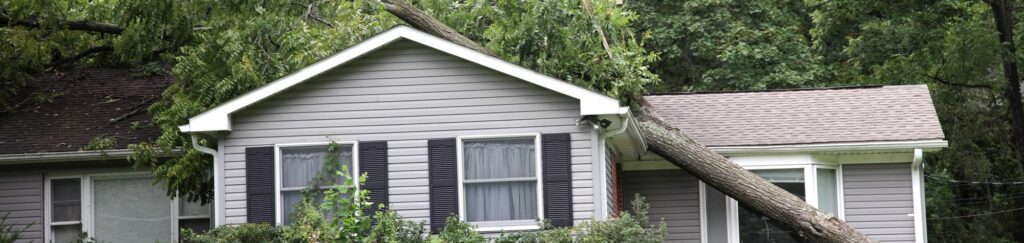
Fallen Tree Damage: Who's Liable and Who Pays?
Are You Liable for Tree Damage to a Neighbor’s Property?
As a homeowner, are you responsible for damage caused when a tree on your property falls on your neighbor’s home, garage, shed, or other insured structure?
In most cases, the answer is no.
When a tree or its branches fall due to forces outside your control — such as a storm or high winds, which are common across Florida during hurricane season — your neighbor typically files a claim with their own homeowners insurer to cover the damage. This is standard practice for homeowners insurance tree damage claims in Fort Myers, Naples, Cape Coral, and throughout Southwest Florida.
When Homeowner Liability for Tree Damage Applies
Negligence and Subrogation Claims
There is one key exception to the rule above: negligence.
If it’s determined that the tree damage resulted from your negligence — for example, you ignored dead limbs that clearly needed removal, or you attempted a DIY tree-trimming job that went wrong — your neighbor’s insurer may pursue you to recover their loss. This process is called subrogation.
In a negligence-based fallen tree liability case, the insurer effectively “steps into the shoes” of your neighbor to seek reimbursement directly from you.
Check Your Homeowners Insurance Policy
Because liability can shift when negligence is involved, it’s worth reviewing your policy or speaking with your insurance agent to confirm:
- Whether your homeowners policy covers liability claims arising from negligence
- What documentation you’d need if a subrogation claim were filed against you
- Whether regular tree maintenance records could help protect you
When Neighbors Threaten Legal Action
Check Local Municipal Laws First
Some neighbors may consider legal action, though a lawsuit is often unnecessary. Start by reviewing your local municipal laws, which vary by city and county.
Generally, you’re not liable for tree damage to a neighbor’s property unless you knew — or reasonably should have known — about the hazard. Proving what you knew or should have known can be difficult and costly to litigate.
Why Settling Is Often Better Than Litigation
Because liability in fallen tree cases can be hard to prove either way, it typically benefits both parties to reach a compromise rather than pursue an expensive legal process.
Frequently Asked Questions
Am I responsible if a tree on my property falls on my neighbor’s house?
Generally, no. If a tree falls due to weather or other forces outside your control, your neighbor typically files a claim with their own homeowners insurer rather than holding you liable.
What is subrogation in a tree damage insurance claim?
Subrogation is the process by which your neighbor’s insurer, after paying their claim, seeks reimbursement from you if the tree damage is found to have resulted from your negligence.
Does homeowners insurance cover tree damage to a neighbor’s property?
It depends on the circumstances and your specific policy. Speak with your insurance agent to confirm whether your homeowners policy covers liability for tree damage caused by negligence.
What should I do if my neighbor threatens to sue over tree damage?
First, check your local municipal laws to understand liability standards in your area. Since proving negligence can be costly for either side, reaching a compromise is often more practical than pursuing litigation.
This article is not intended as legal advice. Please consult legal or insurance professionals for specific information regarding your individual situation.


