

How Stress and Crisis News Affect Investors
In any crisis, “playing it safe” to avoid losing your money can seem like the only rational strategy. However, in the past 60 years, we’ve seen repeating patterns of crises. Despite these crises, the market has been resilient. The Dow Jones Industrial Average rose from 679 points in 1959 to over 36,000 in January 2022.* Regardless, of the type of crisis, history shows that long-term investors who stayed the course through crises and didn’t lose sight of their financial goals have been rewarded.
First, Stress, Anxiety and Crises
When crises hit, news ratings surge. For example, in the early days of the global pandemic, from March 16-20, 2020 Fox News saw its ratings climb 89% over the same time last year, while CNN was up 193%, and MSNBC climbed 56%.1
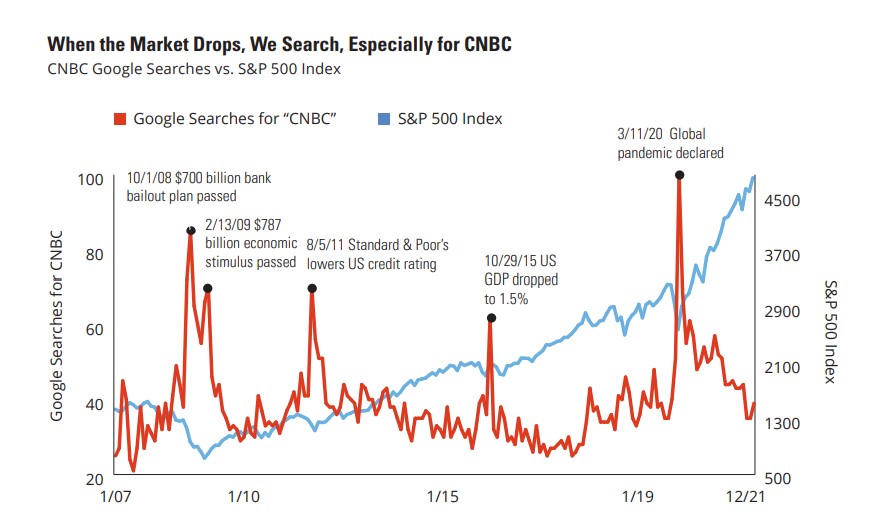
In addition to more news consumption, we’re searching CNBC more often to see how the market is performing. All this news watching and Googling can make us more anxious about the economy.
When we’re anxious, we’re more likely to allocate our attention to negative information.2 Given the choice between information that may offer an optimistic perspective or data that paints a bleak future, an anxiety-influenced investor may naturally focus on threatening information. When anxious, investors often focus on threatening news instead of balanced perspectives. This can lead to short-term decisions that undermine long-term retirement planning.
Second, The Risk of Mistakes
Let’s be honest-crises give investors real reasons to worry. Consequently, many people try to make their portfolios “safer.”
By the end of 2021, cash investments totaled $17.2 trillion. Cash feels secure because it protects principal. However, safety can come at a cost. Loss hurts about twice as much as gains feel good. Therefore, when markets drop sharply, investors feel intense pressure to move into cash.
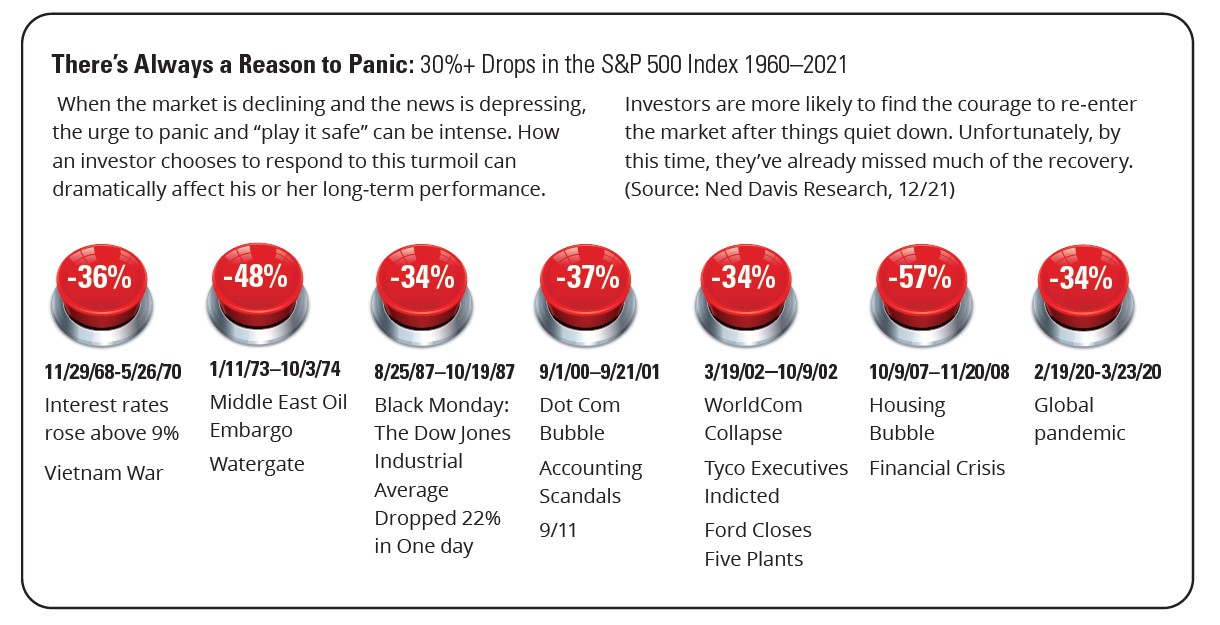
Since 1960, markets have fallen more than 30% seven times.
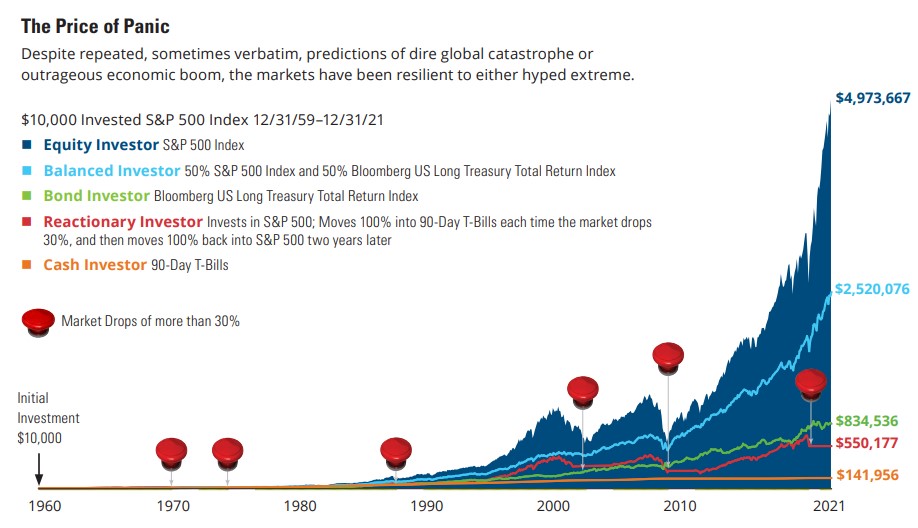
Although moving to safer assets may calm nerves, it often harms long-term returns. Investors who exit during downturns frequently miss powerful recoveries. In other words, reactionary decisions trade long-term growth for short-term comfort. Meanwhile, market volatility combined with nonstop negative news makes discipline harder-even for experienced investors.
Why Market Timing Rarely Works
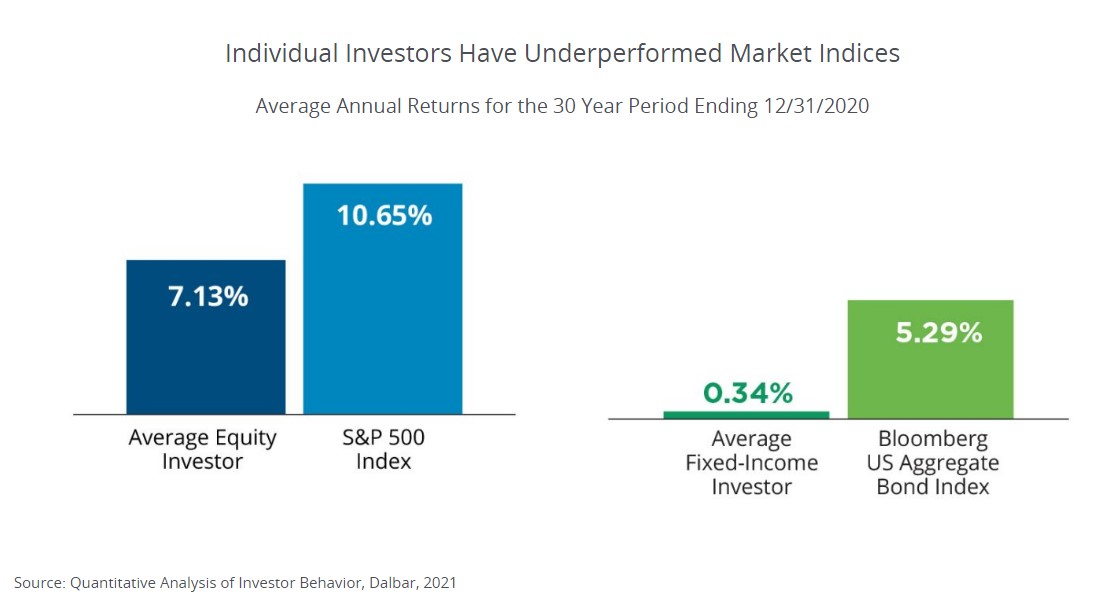
Many investors attempt to time market swings. Unfortunately, research shows this strategy rarely succeeds. Dalbar’s long-running studies reveal that average investor returns lag far behind market returns. Frequent buying and selling usually cause underperformance.
Additionally, anxious investors tend to overestimate the risks of owning stocks and underestimate the risks of avoiding them. Over the past 30 years, individual investors underperformed both stocks and bonds. Therefore, behavior often matters more than market performance.
That’s why working with a financial professional can help. Advisors provide perspective, reduce emotional reactions, and support disciplined investing.
Working with a financial professional can help investors maintain perspective, reduce emotional reactions, and stay focused on long-term retirement portfolios.
Third, Maintaining Perspective in Crises
Nobody likes to face a crisis alone. Managing your investments during extreme market volatility can feel overwhelming.
In March 2020, markets swung wildly. Some days saw drops of 6% to 12%. One day, the Dow Jones Industrial Average fell by 2,000 points. Just days later, it surged by the same amount. Hearing “worst day ever” followed by “best day ever” left many investors shaken.
Because of this uncertainty, many people try to time the market and adjust their portfolios frequently. However, research shows this strategy rarely works.
Dalbar’s Quantitative Analysis of Investor Behavior tracks how investors buy, sell, and switch mutual funds over time. The findings consistently reveal that average investor returns lag behind market indices-often by a wide margin.
In fact, jumping in and out of investments to avoid losses or chase gains remains one of the main reasons investors underperform. Moreover, anxious investors tend to overestimate the risks of owning stocks and underestimate the risks of staying out of the market.
Over the past 30 years, individual investors have trailed both equities (S&P 500 Index) and bonds (Bloomberg U.S. Aggregate Bond Index). The takeaway is clear: investor behavior often matters more than investment performance.
That’s exactly why working with a financial professional matters.
A trusted advisor helps curb emotional reactions, encourages disciplined investing, and keeps your long-term goals in focus. Beyond selecting investments, financial professionals serve as steady guides-helping you resist the market’s psychological traps, even during periods of extreme uncertainty.
“But It’s Different This Time”
Many people feel that the current crisis is different from previous ones—and in some ways, it is. Every crisis is unique. With constant news coverage, it’s easy to feel that today is bad and tomorrow will be worse, leading to overwhelming pessimism. Yet, even amid the negative headlines, remarkable innovations are happening that rarely make the news.
For instance:
-
MIT scientists have developed a new type of plastic that is twice as strong as steel under load tests.
-
The metaverse is creating immersive virtual worlds, potentially opening new software markets.
-
Devices now exist that allow patients with paralysis to control digital devices using their thoughts.
-
Electric, zero-emission, self-driving trucks are improving shipping efficiency, safety, and environmental impact.
Historically, the U.S. has faced 26 bear markets since 1929—and has recovered from all 26. While the future is uncertain, Warren Buffett’s words remain true: “It’s never paid to bet against America.”
Three Things to Remember About Maintaining Perspective
Crises often make us focus on the negative, as constant 24/7 news coverage can heighten anxiety about the economy. This anxiety can, in turn, make us more vulnerable to making impulsive investment decisions that may harm our long-term financial goals. To maintain perspective, it’s important to work with a financial professional who can provide guidance, help you stay disciplined, and resist the urge to react emotionally to market volatility.
NEXT STEPS
Talk to your financial professional to gain perspective and guidance in times of crisis. If you don’t have one, consider finding a trusted advisor who can help you navigate market swings and stay focused on your long-term goals.
For more insights on retirement and investment planning, see:
FAQ:
1. How does financial news affect investor behavior?
Financial news can trigger anxiety and stress, leading investors to focus on negative market events. This often results in reactionary decisions like panic selling, which can harm long-term investment returns. Staying informed, but not overwhelmed, is key.
2. What is emotional investing and why is it risky?
Emotional investing occurs when decisions are driven by fear or greed rather than logic. During market volatility, investors may sell assets prematurely or avoid opportunities, reducing potential long-term gains.
3. How can I avoid panic selling during market downturns?
To avoid panic selling, maintain a diversified portfolio, set long-term financial goals, and consult a financial advisor. Understanding market trends and historical performance can also reduce emotional reactions.
4. Why does market volatility cause anxiety for investors?
Market volatility exposes investors to rapid changes in asset values. Constant news updates and crisis coverage amplify stress, often causing people to make impulsive financial decisions that compromise long-term growth.
5. How does behavioral finance help investors?
Behavioral finance studies how psychological factors impact investment decisions. By recognizing emotional biases like overreaction to negative news, investors can develop strategies to stay disciplined and improve portfolio performance.
6. What role do financial advisors play during crises?
Financial advisors provide perspective, help maintain discipline, and guide investors through volatile markets. They reduce emotional reactions, ensuring long-term investment goals remain on track even during downturns.
7. Can reacting to market crises impact long-term returns?
Yes. Studies show that investors who try to time the market during crises often miss significant recoveries. Consistent, long-term investing typically outperforms frequent reactionary moves.
8. How should investors maintain perspective during crises?
Focus on historical market recoveries, diversify investments, and avoid obsessing over short-term news. Working with a financial professional helps investors make informed decisions without emotional interference.
9. Why is it important to stay invested during market volatility?
Markets historically recover from downturns, and staying invested ensures you participate in these recoveries. Moving entirely to cash can protect principal short-term but often sacrifices long-term growth.
10. How do crises affect individual investors differently from institutional investors?
Individual investors often react emotionally to crises, while institutional investors use structured strategies and research. This behavioral difference explains why long-term returns for individuals may lag behind market averages.
Sources
- Ratings Skyrocket for Cable News Amid Wall-To-Wall Coronavirus
Coverage, Newsweek, 3/23/20 - Fear, Finance, and The High Anxiety Client, MIT AgeLab, 2016
- Board of Governors of the Federal Reserve System (US), 2021
- What Is Loss Aversion? Psychology Today, 3/8/18
- Quantitative Analysis of Investor Behavior, Dalbar, 2021
- MIT scientists create a super plastic that’s 2 times stronger than
steel, Fast Company, 2/7/22 - 2022 will be the biggest year for the metaverse so far, CNBC, 1/1/22
- Synchron kicks off clinical trial on device that helps patients with
paralysis communicate, mobihealthnews, 1/29/21 - Einride launches autonomous pods and electric freight operations in
US, TechCrunch, 11/3/21 - Ned Davis Research, 12/21
This article is sourced from Hartford Funds Distributors, LLC, Member FINRA.