


Long-term care insurance (LTCI) policies come in many shapes and sizes. The number of options available can make it difficult to compare policies. Print this list of features and benefits, and refer to it as you compare LTCI policies. To find the right policy for you, make sure that you compare similar policies that combine the benefits and features you want.
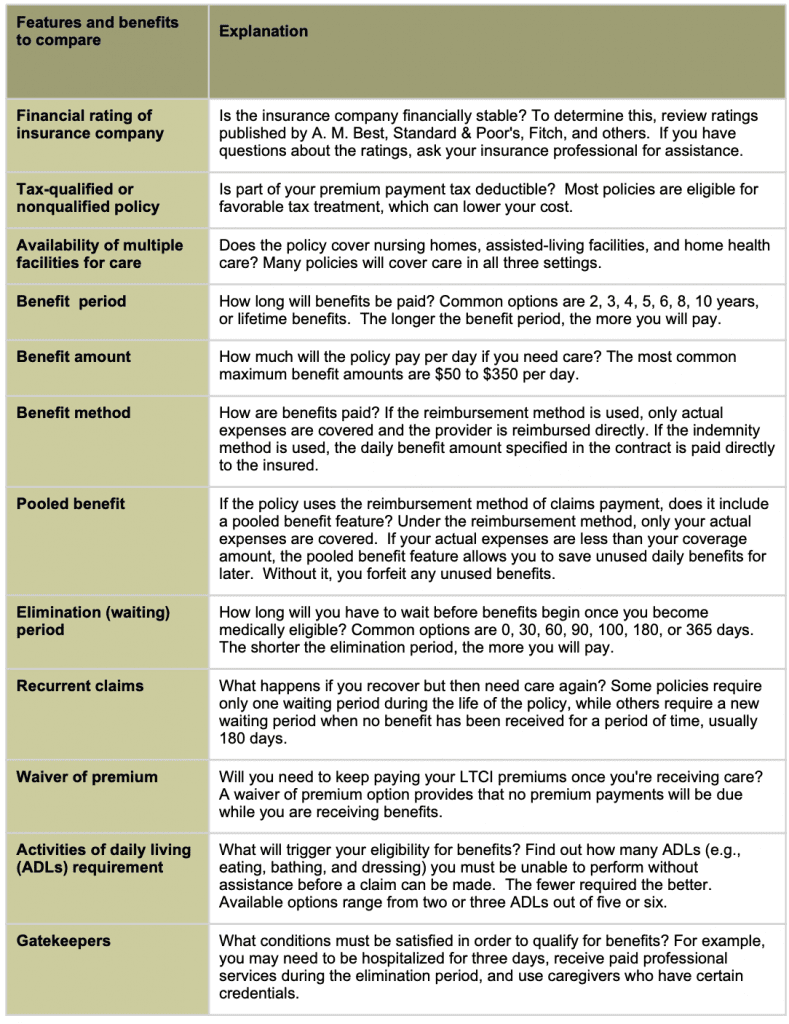
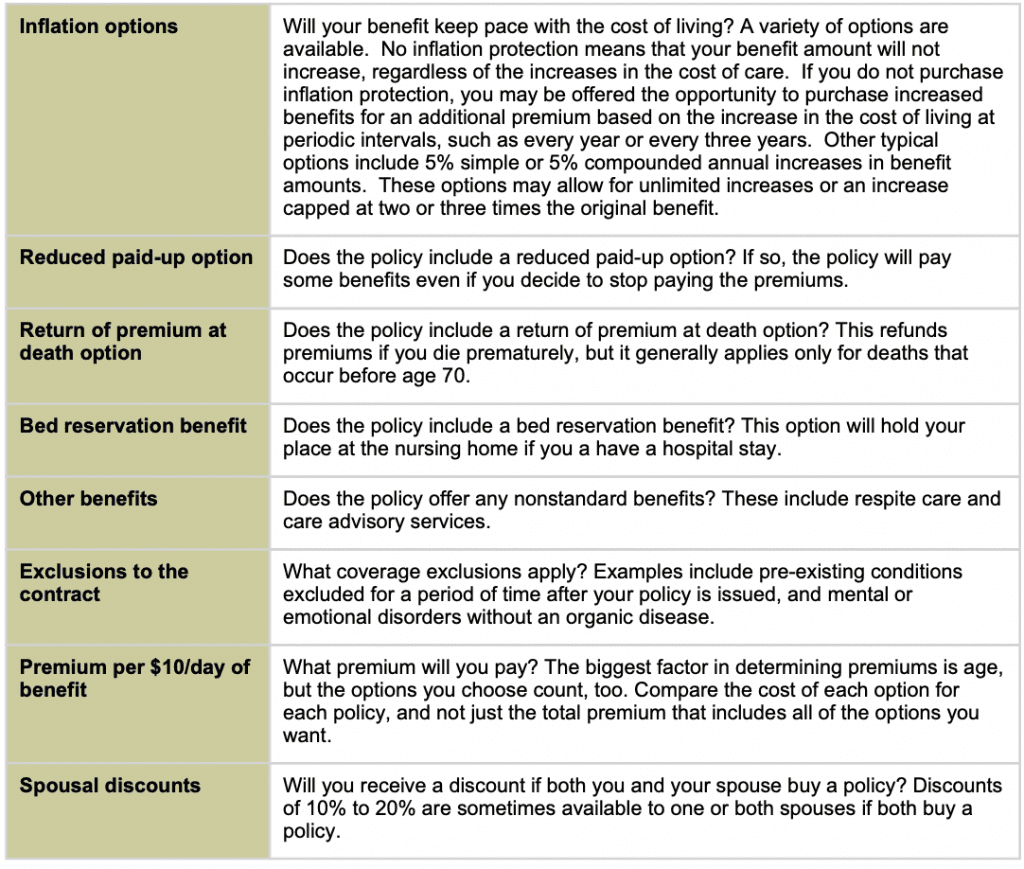
Planning for long-term care is essential to protect your finances and ensure quality care as you age. One option many people consider is long-term care insurance (LTCI). But how much does it cost? Let’s break it down.
What is Long Term Care Insurance?
Long-term care insurance helps cover services such as in-home care, assisted living, and nursing home care. It is designed to protect your savings from the high costs of extended care. Policies vary in coverage, duration, and premiums.
Factors That Affect the Cost
Several factors influence the cost of long-term care insurance:
-
Age – The younger you are when you buy a policy, the lower your premium. Buying later in life usually costs more.
-
Health – Insurers review your medical history. Chronic conditions may increase premiums.
-
Coverage Amount – Higher daily or monthly benefit amounts lead to higher premiums.
-
Policy Duration – Longer coverage periods cost more than shorter ones.
-
Elimination Period – The waiting period before benefits begin affects cost. Shorter periods mean higher premiums.
-
Inflation Protection – Adding inflation protection increases premiums but preserves your policy’s value over time.
Average Cost of Long Term Care Insurance
The cost of long-term care insurance varies widely. On average:
-
A 50-year-old healthy individual might pay $1,800 to $2,500 per year for a standard policy.
-
A 60-year-old may pay $2,500 to $3,500 annually.
-
Adding inflation protection or higher benefits can increase premiums significantly.
These are just averages; your final premium depends on your age, health, and policy features.
Tips to Lower Your Premium
You can manage costs with a few strategies:
-
Buy earlier to lock in lower rates.
-
Choose a longer elimination period.
-
Select a shorter benefit period if it fits your needs.
-
Compare multiple insurance providers to find competitive rates.
Final Thoughts
Long-term care insurance provides financial protection and peace of mind. While premiums vary, starting early and understanding your coverage options can help you find a policy that meets your needs without breaking your budget.


