

Now that you know your brain can age faster than your chronological age, you may wonder how this happens. One major reason involves the buildup of brain trash-a natural by-product of everyday brain activity.
Your brain works nonstop. Therefore, it creates waste as it processes information, repairs cells, and responds to your environment. Over time, chemical reactions, environmental toxins, and damaged cells leave behind debris. Although your brain normally clears this waste, problems start when the cleanup system slows down.
To put it simply, the more trash that builds up, the older your brain becomes.
What Is Brain Trash?
Think of your brain like a busy city such as Manhattan. Just as cities produce garbage, your brain creates waste.
In fact, your three-pound brain produces about five pounds of trash every year. Usually, your body recycles or flushes it out. However, when this process fails, trash begins to accumulate. As a result, you may experience reduced focus, lower energy, and decreased productivity.
Brain trash includes:
-
By-products of cellular activity
-
Environmental toxins
-
Old or damaged brain cells
Moreover, excessive buildup can interfere with communication between nerve cells, which may contribute to memory problems.
How Sleep Cleans Your Brain
Fortunately, your body has a powerful cleanup system and sleep plays a key role.
Dr. Nedergaard, a neuroscientist, studied how the brain repairs itself. While researching sleep, she discovered something remarkable.
During deep sleep, the brain shrinks to about 65% of its normal size. At the same time, it begins to pulse rhythmically. This shrinking creates space between brain cells. Consequently, waste, toxins, and debris get squeezed out.
Next, spinal fluid rushes in and washes away the garbage. In effect, your brain receives a nightly “deep clean.”
Therefore, quality sleep does more than refresh your mind-it actively protects your brain from premature aging.
Brain Trash and Alzheimer’s Disease
Many forms of brain trash exist. However, plaques and tangles appear most often in Alzheimer’s disease.
These harmful deposits block communication between nerve cells. Over time, this disruption can lead to memory loss and cognitive decline.
Key Facts About Brain Trash
-
It forms as a by-product of brain activity
-
A three-pound brain produces about five pounds of waste per year
-
More buildup equals faster brain aging
Brain Trash
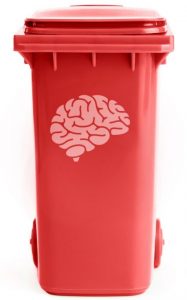
-A byproduct of the work your cells do
-A 3 pound brain makes 5 pounds of trash per year
-The more built-up trash, the “older” the brain
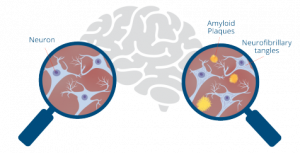
Many different types of trash can build up in the brain. Plaques and tangles are the two most common forms of brain trash found in Alzheimer’s disease. Plaques and tangles can stop communication between nerve cells which can be a part of what causes memory loss.
About the author: Marc Milstein, PhD
Dr. Marc Milstein is a leading scientific researcher on neuroscience, health, and happiness. His insights provide science-based solutions to keep the brain healthy, lower the risk of dementia, boost productivity and maximize longevity. He earned both his Ph.D. in Biological Chemistry and his Bachelor of Science in Molecular, Cellular, and Developmental Biology from UCLA.
Dr. Milstein’s new book “The Age-Proof Brain” has been a #1 best seller on Amazon in several categories, including, Aging, Longevity, and Neuroscience


